projects
MyBeli
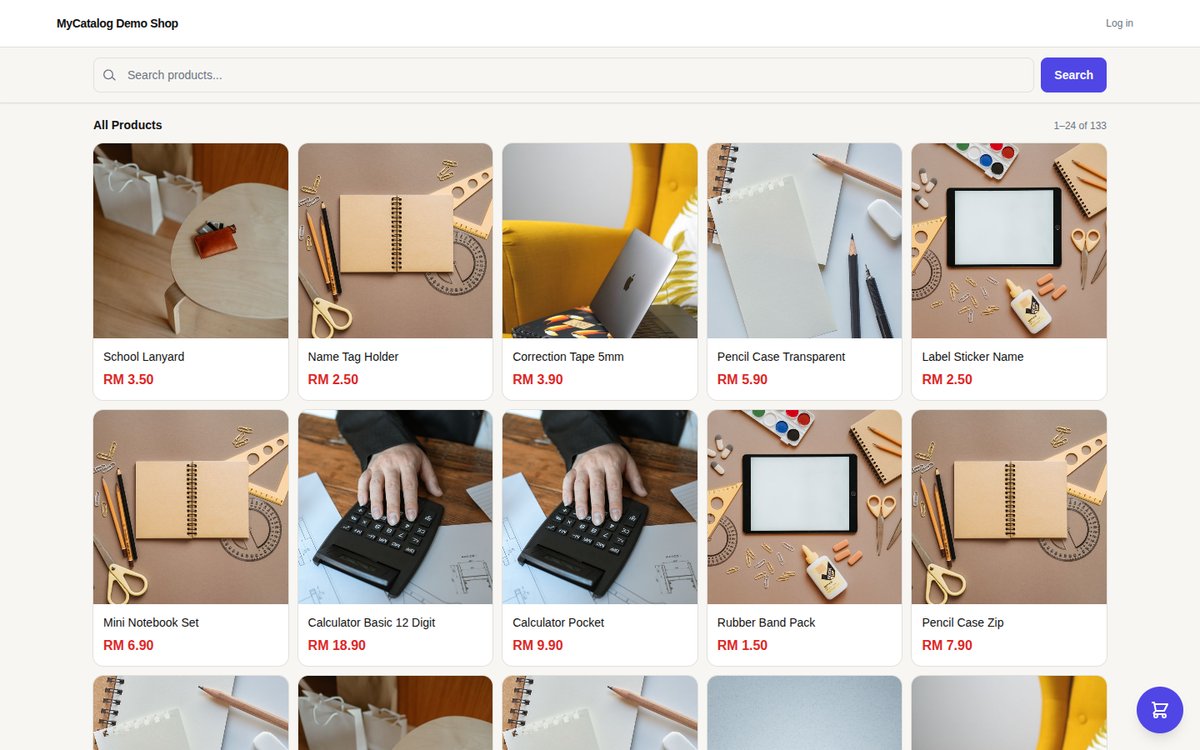
A multi-client catalog and inventory system for small shop owners who need a public catalog that stays current without constantly resending PDF files.
live sitesource repository is private
MyBeli exists to replace a fragile catalog workflow: manually edited PDFs that need to be re-exported and resent every time a product, price, or stock count changes.
What it is for#
The target users are small shop owners who need a current public catalog and a lightweight management surface behind it. Instead of treating every client as a separate hand-built site, MyBeli is designed as one system serving multiple independent shops.
What it does#
- Publishes a public web catalog that stays current without resending PDFs.
- Provides product and inventory management for each shop owner.
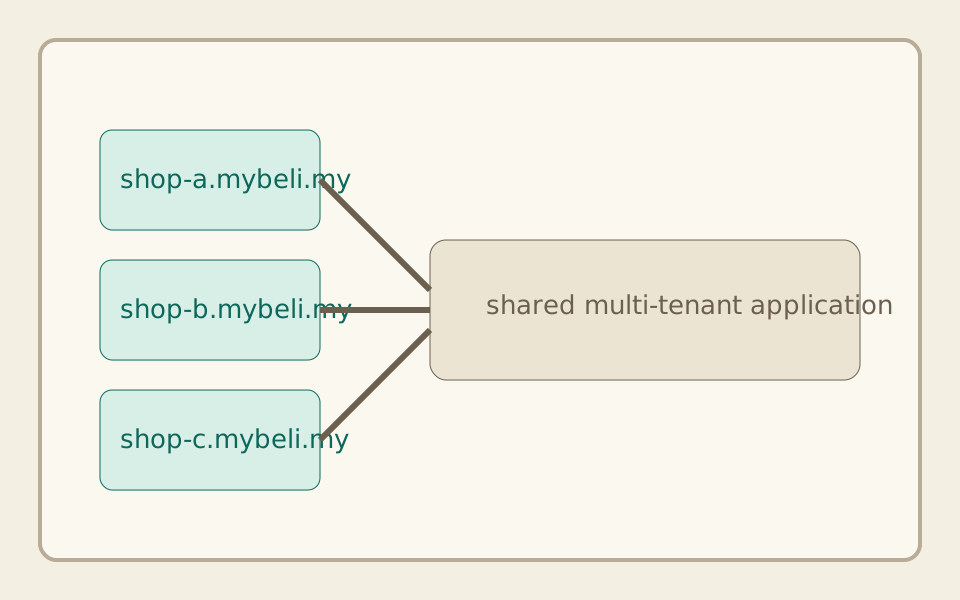
- Supports multiple independent client shops in one platform.
- Allows branded subdomains such as
shopname.mybeli.my. - Imports and versions product catalogs from Excel workbooks, with strict validation and a confirm-before-apply diff so a shop owner can see exactly what a spreadsheet upload will change before it goes live.
- Lets a customer submit an order or quote request straight from the catalog, which the shop owner can turn into a formal quote document for the customer to review and accept.
Multi-tenant shape#
The public-safe version of the architecture is straightforward: each shop has its own catalog identity, product set, and management workflow, while the application still behaves like one shared system. Every client runs from the same codebase and image, deployed separately with Docker Compose behind nginx, each with its own PostgreSQL database. There is no shared row-level multi-tenancy, which keeps one client’s data fully isolated from another’s. That keeps onboarding and maintenance much simpler than running a custom codebase for every client.
The platform site#
The apex domain, mybeli.my, is a special case of the same client model: it runs
the public landing page instead of redirecting straight into a catalog. Scrolling the landing
page previews the live demo catalog with a “garage door” transition, the same lift/lower page
transition this portfolio site uses for its own project pages, borrowed over because it turned
out to be a good fit for revealing a catalog underneath a landing page too.
Provisioning pipeline#
Adding a client isn’t a manual deploy. A push to main runs manifest validation and
a dry-run reconciliation in CI, builds the application image, and pushes it to a registry
pinned by immutable digest. On the server, a staged pipeline then reconciles every active
client manifest in a fixed order: provision the database, apply runtime configuration, cut
over the public hostname, publish the release, and activate the client’s administrator
account. Each stage records what it has already done, so a failed run can be retried safely
without redoing finished work or double-provisioning a client.
A manifest validator rejects anything secret-shaped, meaning a value that looks like a password, API token, or email address, at CI time, before it can even be merged. Real secrets live only on the server, never in the repository.
Technical notes#
MyBeli is a Phoenix LiveView application (Elixir, Phoenix, Ecto, PostgreSQL), started from an open-source Phoenix template rather than a homegrown web stack, deployed as one Docker image reused across every client and configured entirely at runtime through environment variables (client slug, host, database URL, upload path). It’s built and maintained together with another developer. I have deliberately left deployment credentials and customer data out of this public page.
The source repository is private.
Public links#
- Live: mybeli.my, the platform landing page, which leads into a public demo catalog.